| Notes |
- General Notes: Info from Rachel Johnson. Clyde was Charles Herbert Johnson's son by his first wife, Bessie Odom, who died three months after his birth. Sadie Lammon raised Clyde. See note for Charles Herbert Johnson.
The following note contributed by Joseph Clyde Johnson - EBL.
"The family left Evergreen and moved to Enterprise, Alabama in 1919. At that time the family included parents and three children, Clyde (myself), William, and Mary Keith. Rachel and Charles were born later in Enterprise. The family depended on Dad's shoe repair business. Of course, the shoe repair business was more than shoe repair. The repair of all leather goods (gear for horses and mules for instance) was done there. Shoe sales, also, was a part of the business. Dad and his shop provided necessities, plus, for the family. We were homeowners, never without an automobile to drive. Of course The Great Depression changed everything as explained later. All: townsmen, farmers, blacks, and whites came "to town" on Saturday. The atmosphere was much like that of a county fair except there were no rides. The people spent the day buying groceries, clothing, hardware stuff, cold drinks and candies, medicines, and other things that could not be produced at home (in town and/or on the farm). Needs for repair were handled by the various repair shops: auto, equipment, shoes, etc. But, most importantly, Saturday was the day to socialize with friends and acquaintances - have a good time, to see and be seen. All businesses remained open until 9 P.M. on Saturday.
People, on the whole, enjoyed a sense of belonging and a sense of responsibility to others, even those beyond family and friends. There were no governmental welfare programs, federal, state or local: except for a state hospital for the mentally ill; a county "poor house" for the care of those that could not provide for themselves; and church supported orphanages for children. Although the hospitals, "poor houses", and orphanages existed, most of the people needing help got that help through their families. For example, at one time my father provided all the needs of Edward Lammon, my stepmother's brother (he lived with us; ate with us; did things -with us) until he was able to support himself again. Edward contributed much to my family - at this time especially. Similarly, my father's stepmother (Grandma Ina) was under his care for five years. Other families in the community had similar responsibilities.
There was support among as well as within families. Illnesses and deaths brought out such support. When Mary Keith (my half sister) was ill, people (some of whom were mere acquaintances) brought food, visited, and showed concern in many ways. Mary Keith's illness caused her death. After the funeral, many visitors, some of whom I knew by name only, came and spent time with us. There were prayers, remembrances, expressions of concerns and hopes, and plans for the future. The community became a reality to me that bleak afternoon. The Enterprise experience lasted nine years only. In 1928, my father moved his business to Dothan, Alabama, a town of about 20,000 population at that time. Although successful in Enterprise, Dad looked forward to greater things in Dothan. The Great Depression changed everything. The business had to be sold (at a great loss) in 1930 and the family moved to our farm (my birthplace) that year.
My Dothan experience was not positive except for high school experiences (grades 11 and 12). Most memorable was football. As a senior, I was a "starter" at right guard on offense and defense. The offense and defense had the same players: separate offensive and defensive teams were unknown. I remember that a player, upon being taken out for a substitute, could not re-enter the game until the following quarter. I was never taken out of a game because of injury: lucky. Our record that year was five wins and three losses. We lost games to Tallahassee, Andalusia, and Hartford. Hartford was undefeated that year. Their star was Millard (Dixie) Howell who became an all-American performer
at the University of Alabama.
We defeated Eufaula, Geneva, Elba, Troy, and Enterprise. The final game of the season was the one with
Enterprise; undefeated at that point (earlier they had canceled a game with Hartford because of controversy
over the eligibility of a player on the Hartford team). Dothan had never defeated Enterprise when the game was
played on the Enterprise athletic field. The game was played at Enterprise and Dothan won 26 - 12. I was the
hero of the game but I was the only one who noticed that bit of history.
Football made it possible for us to react to defeat and victory. We learned that some writer (Kipling??) was correct when he called both, "impostors". We learned to work hard with tightly centered concentration. We learned other things: great autonomic rewards come when sacrificing self makes group success possible; and life is the memory of selected events of exhilarating accomplishments (as judged by the accomplished) and crushing defeats (again, as judged by the loser). All youngsters should participate in High School football if they could be guaranteed a repetition of my experience. After high school graduation (1930), I moved, with my family, to the farm near Evergreen. This was a temporary move; Dad knew that, because of being away from farming so long, he would have to establish a small business again. I haven't space to explain how he did it but he did: in Andalusia, Alabama (shoe repair and sales again). By this time, 1931, the Great Depression was so strong that business slowed to a mere dribble. People bought necessities only. We were never hungry; our automobile was available when needed. But, for several years, even subsistence was not a certainty. Approximately 20% of the working population were unemployed. And yet, people in general believed that prosperity would return. The Great Depression could not destroy the people of Andalusia, Enterprise, Dothan, etc. June 15, 1931 my maternal grandmother, Roxie Johnson Odom, died. She had been active and strong all of her life; but now at age 60 a cerebral hemorrhage took her life. My mother during infancy, this lady was outstanding: a leader of her family and a leader in community affairs. I loved her Since my mother (Bessie Odom) died earlier, I was an heir t o the Odom estate. My inheritance was a farm which included 80 acres of land, 40 of which had been cleared for purposes of cultivation (the remainder: forest), a small house, and a barn. Also, I received approximately $1,000 in cash. Dad as executor of my estate (I was 18 at this time) would not allow any of the resources to be spent on family or business needs. One day he surprised me by saying, "Clyde, I want you to attend Troy State College." My dream was reality. I was going to college.
As a student at Troy, I knew how to make good grades and that's not saying much about scholarship. At the end of the first quarter my report of academic grades was three "A's" and two "B's" for a grade point average of 3.60. I had an uneventful (nothing traumatic) happy college experience. Had all the choices been mine, I would have spent my life as a college student; or a college professor, something else I included in my dreams. My GPA for all undergraduate studies was 3.7 (barely enough for admission to graduate study at Peabody, later).
June 1, 1932 I met Agnes Wishum, while the two of us were enrolling for a summer quarter of study at Troy. Interestingly, I did not know Agnes although she and I had families living in Andalusia. She was employed as a first grade teacher in a rural school near Andalusia. Living in the community where she taught, kept her away from Andalusia most of the time, and I was attending college classes. But, there she was - slender, beautiful complexion, dark brown hair, deeply tanned, and blue eyes. I was smitten. After I introduced myself I told her I was from Andalusia. She did not tell me to "get lost". Actually she was interested in me because my claim to be from her hometown was just "a line", she thought; however, it was, from her point of view as interesting "line". So, we talked, went to the student store for drinks, and agreed to meet again later that evening. Our love and care for each other grew to the point we were married: April 30, 1935.
By this time, Agnes had achieved recognition as a "demonstration" primary grades teacher. She was called upon to demonstrate teaching techniques for beginning teachers. Of more importance was her popularity among her students and their parents. Her fellow teachers held her in high esteem, also. She was a great teacher. Her recognition in education was much more significant than mine. Yet, she elected home making as her major career. Our first son, Joe, was born Oct. 5, 1940. More about this will come later in this paper.
Now, let's return to my contributions to this story. Sept. 1934 I began my teaching career at a rural two-room school (grades 1 through 6). I was the principal. I have been known to tell listeners that I began at the top: principal of an elementary school. I rarely got around to explaining that the school was a tiny one: only one teacher other than myself. She was a lady with several years experience as a teacher and L a male, with no experience was named Principal. She taught grades 1,2, & 3 (35 pupils) and I had grades 4,5, & 6 (25 pupils).
In 1936 my school (Harmony) was abolished and I was moved to a larger school (Straughn) with grades 1 through 12. Agnes had been teaching there for several years. I taught Junior High courses in Social Studies. I was the athletics coach also: basketball and baseball. We had Junior and High School basketball while baseball was open to High School students only. My years as a teacher and athletics coach at Straughn School ended with the close of the school year 1941-42. I was a poor coach and a good teacher-not great, just good.
In 1942 I became principal of a large Junior High school (Carolina) located eight miles south of Andalusia. This so-called Junior High was a school having grades 1 through 9. Agnes was the first grade teacher: After one year at Carolina I was moved to Rose Hill, another Junior High like Carolina, but larger, more buses and a cafeteria. After graduation, Rose Hill students went to Straughn High School. As a principal, I was low average, and not happy. I hated the problems related to transporting students to school. Also, the problems related to providing hot lunches for students, teachers, and visitors were irksome. Again, Agnes was our first grade teacher with the exception of 1943-44. Her absence that year will be explained later-your guess is right, I' m sure. Agnes' mother, Mrs. Beatrice Wishum (Granny) played as important role in our lives. Granny ran a boarding house for women in Andalusia. After Agnes and I married, we prevailed upon Granny to close her house and live with us. Actually, it was more than living with us. Any large school, at that time, had teachers who found a boarding house, near their place of employment, convenient. So, Granny operated a boarding house in the community where we taught. Agnes and I and two or three other teachers were her boarders. This arrangement worked well; so well that in 1937 we bought a lot across the street from Straughn School and built a small house (3 bedrooms) and a garage apartment (1 bedroom). The cost was approximately $2,500. Granny was an important part of our lives; and this boarding arrangement was continued until we moved to Nashville, Tennessee (1946) for graduate study at Peabody College; now a part of Vanderbilt University. Peabody College, 1946; true, but prior to this time our lives; everything we planned or did, were influenced first by Joe (1940) and then and for always Joe and Tom (1943). The future was ours. Someone to love and love us. The inescapable responsibilities relating to two sons were the essences of our lives. Their accomplishments were ours.
Joseph Herbert Johnson was born in Andalusia Memorial Hospital October 7, 1940. We gave Joe my name (Joseph) and my father's name (Herbert).
Thomas Wishum Johnson was born in Andalusia Memorial Hospital October 5, 1943. Tom was named for Agnes' father, Thomas Wishum.
Agnes and I, Joe and Tom were so fortunate because Granny was there to help when needed in the nurturing and care of us. Also, "boarders" made much of the kids. My father and mother and my brother and sister and Agnes' brother and sister lived in Andalusia. Joe and Tom had much attention. On to Peabody. With Agnes and me were Joe and Tom and Granny. That group faced the vicissitudes of graduate study.
Our decision to leave home and work and pursue different goals was made after many hours of debate that involved, in the beginning, Agnes and me; but eventually included Granny, Dad and Mother Johnson, and friends. We believed that without additional educational credentials, further advancement in our vocation was unlikely. Continuation of the happy life style, which included Granny and the "boarders," and living in our house, was not certain. In fact we were sure that it would not last; Granny could not carry her heavy workload indefinitely; - teachers move to new positions and new places; remaining in our house was a dream destined to burst. So, we had to face the reality of change. We had to position ourselves so that we could control change as much as possible. Becoming a college professor was a dream that I considered to be among my wildest. Still, we knew that with the end of World War II many returning men and women would, for many reasons enter or return to college nationwide. All of this led to my application for admission to graduate studies at Peabody College. I was accepted. I applied for a Fellowship in Student Personnel Work, which was granted. The fellowship paid $600 per school year and provided great experience for a fledgling psychologist. During that first year, adjustments to major changes in our lives were necessary. Some of the changes were: living in a house that was not our own; giving up a career on Agnes' part; leaving a situation in which our young sons (3 & 6) were happy; thrusting Granny into adjustments in her life; leaving certainties in regard to income, duties and responsibilities; and moving 400 plus miles from our families and closest friends. Joe completed the first grade; I completed the work for and received a Masters Degree in Psychology. Agnes ran the show that kept our little family happy and moving forward. Tom stayed with Granny and Mother when Joe and I went to classes. Granny, although uncomplaining, was not happy. I remember exciting courses in Statistics, Tests and Measurements, Developmental Psychology, and History of Psychology. Also, I remember my experiences as a Fellow in Student Personnel work: the standard tests that were administered, scored and organized into meaningful reports, participating in the research related to student personnel work; and working with students referred to me.
I began work toward a Doctor's degree in June 1947, expecting to return to Andalusia or someplace near Andalusia soon. The principalship of Opp High School was offered and the Superintendent of Opp Schools asked me to reply to his offer within two weeks. Earlier; Dr. Berdie, chairman of the Peabody Psychology Department, told me that the Peabody Placement Center had received a statement from North Carolina State College that they were seeking a full-time position in Educational Psychology. I applied, and tried to forget it. Also I applied for similar positions at The University of West Virginia and a State Teachers College in Pennsylvania. The day following the talk with the people in Opp, a letter came asking me to go to Raleigh, NC for an interview pertaining to the position at NC State College in Educational Psychology, all expenses paid. I telephoned them that I would be there for the interview at the time they had suggested. I talked with the chairman of the Psychology Department, another professor in the department (there were only two positions in the Psychology Department at the time), the Dean of the School of Education, and two other professors from other departments. They were cordial and genuinely interested in my experience in the public schools of Alabama and my academic achievement at Peabody. A position at the level of instructor was offered at the close of that day of interviews (all job offers were conditional; every person designated to fill a full time position had to have the approval of the Board of Trustees). I told them that I could not accept the position as an instructor. Assistant Professor, I told them, would be acceptable. After some discussion of the position in question, the committee agreed to offer me the position at the level of Assistant Professor. Verification of the offer came in August. In the meantime I turned down offers from the school system in Opp.
We moved to Raleigh September 6,1947 (my birthday, 35 years old). Granny was with us as we began the new venture. We were broke, in fact, we borrowed $1,000 for a start in our new world: The next day I went to the department offices and found that my office (a private one) was ready. I also received my first monthly check. I expected one in October not September. The first responsibility given to me was to make preparations for the administration of a battery of standard tests to all incoming freshmen (1000 expected). I was asked to list my needs including the time and facilities for the training of the proctors. I was a part of NC State College. Although the move to Raleigh was exciting and challenging, Granny was not happy. Her role in our family had not the central quality it had formerly. Her son, Levi, and daughter, Elma, and their families were 650 miles away in Andalusia. She returned to Andalusia in December 1947. She was the stabilizer, but she was much more than that. I can't find the words to describe her importance to us. We loved her. For 12 years she was ours and we were hers.
From July 1,1947 until June 30, 1978 (31 years), I was a part of NC State University. My promotions were Associate Professor, 1956 and Professor in 1966. June 1, 1956 was the date for the completion of the doctorate at Peabody. On June 30, 1978, Emeritus Professor of Psychology became my title. That meant, "You're through pal. We'll try to get along without you." I served two terms (beginning in 1956) on the NC State Faculty Senate representing the School of Education (presently the College of Education and Psychology). My first action as senator was to "take the floor" in opposition to the proposal to ask the state to erect several new buildings on the campus. My argument that we could be more efficient in the use of the buildings that we had flew like a lead balloon. College professors love new buildings, needed or not. As a senator, I tried to fly but I didn't get off the ground. At that time the School of Education had a Personnel Committee, elected by the faculty, whose major responsibility was to recommend faculty members deserving of promotions to the Dean of the School. If Departments wanted members promoted they would send evidence in support of such promotions to the Personnel Committee. The Personnel Committee, then, would study the proposals and make its recommendations to the Dean. I was chairman of that committee one year. It was an interesting experience.
Throughout the years Agnes was a great source of strength for me and for our sons, Joe and Tom. Once, during the period of graduate study at Peabody, I became discouraged and wanted to end that phase of our lives and return home. Agnes, figuratively, grabbed me by the nape of the neck and shook me with "No, absolutely no. You can't let us down in this way and you can't let yourself down. Let's talk about steps to take to get going again"
We talked, we made plans, and we continued study at Peabody. Agnes loved Joe and Tom. She gave up her life for them. Well, that is not true. Joe and Tom were her life. She gave up a promising teaching career for them. She spent years as Den Mother (Cub Scouts) for Joe and Tom's groups. She even helped Tom with his paper route once. She was there - the homemaker. Even so, she found time for church activities: Sunday school teaching, circle leading, committee chairing, etc. She was active in NC State affairs: book club memberships, active participation in the NC State Women' s Club.
In 1956 (Joe and Tom were teenagers by that time) she began teaching again. She had her own first grade. It was housed in the Shelly Private School but it was her responsibility completely. In 1966 she retired. That was the year we moved into our new home (3318 Hampton Rd.) and the year of my promotion to Professor at State. Joe and Tom led active and happy lives during childhood. They had many friends and participated in school and church activities. Tom was a good tennis player, lettering in that sport at Broughton High School. Both found summer employment after the age of 15 or 16, and summer employment continued until college graduation. Both became students at NC State College graduating with majors in Electrical Engineering. Presently, Joe runs his own company in Sunnyvale, California. This company was made possible because of developments in microwave - technology. Tom is Projects Manager with Jacobs-Sirrine, an engineering consulting firm.
Joe married Dorothy Fitts (3-21-64). They have three children: Kim Lynette (12-28-66), Christopher Scott (4-8-68), and Leah Ellen (3-27-70). im married Patrick Johnson (44-92). They have one son, Michael Tyler (8-12-94). Tom married Rebecca Stanton (5-31-64). They have two children, Robert Trent (4-23-68), and Teresa Lauren (11-8-70). Trent married Stacey Kristine Gardner (4-25-92). They have one son, Trent Scott (11-25-92).
What a family. First there were Agnes and I; that's two. Now there are fifteen: count 'em. Everyone an interesting, exciting person. Everyone a person with whom association is desirable. Everyone a person with whom you would enjoy golfing - well that might be stretching it a bit. But, truly, I could not pick fourteen better people for a family. And, I have been told that the number will increase by two during the year. I will not mention these perspective in-laws by name because I am tired of writing. There is a need for a great granddaughter. Get busy people. TJ and Michael are great: highly intelligent, healthy, and happy great grandsons. But there is a need for more always. I have been unbelievably healthy: physically, emotionally, and mentally. I have had: food in my belly, (sorry, Carl Sandberg) and food to merely enjoy; no jail; intense pleasurable excitement anticipating and realizing the fruition of dreams; laughter, life renewing laughter, because people are funny, especially oneself; numbing fear and anger when trying to accept a failure; a sense of wonder and awe upon discovering bits of knowledge about human behavior, physics, chemistry, mathematics, and/or astronomy; helpless sorrow when a family member died; many experiences of blinding awareness of being - just being; the ecstasy of embracing another knowing that I loved and was loved; finally a sense of peace with the knowledge that there is a God.
That is life; life is all of the above." Excerpt from "Some of My Memories", Clyde Johnson, 1996
|




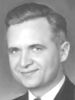
 1912 -
